
How to Choose a Location for Your Portrait Session

One of the first decisions you'll make when planning a portrait session is where we're going to take the pictures. You basically have two choices: in the studio or on location.
Neither one is automatically better. They just give us different kinds of photographs.
A studio gives us much more control over lighting, backgrounds and distractions. An on-location session gives us something else to work with: an environment.
And that environment can become a pretty big part of the picture.
Start with the story, not the scenery
It's tempting to start by looking for the prettiest place you can find.
But pretty doesn't necessarily mean right.
Think about what you're trying to communicate with the photos first.
If you're an architect, photographing you around interesting buildings might make sense. If you own a restaurant, your restaurant may be the obvious choice. If you're building a personal brand around Baton Rouge, recognizable parts of the city might help tell that story.
Sometimes the best location isn't particularly glamorous. It's meaningful. That's usually more interesting anyway.

Your own environment might be the answer
Don't overlook the places where you actually spend your time.
Your office, workshop, storefront, home, studio or other workspace can make a great portrait location, especially when the photos are being used to tell people something about who you are and what you do.
These kinds of environmental portraits give us things to interact with and can make the photos feel much more natural than simply standing in front of a pretty wall.
Of course, take a good look around first.
The camera sees clutter. A space that feels perfectly normal when you're standing in it can suddenly look very busy once we frame a photograph there.
Look for variety
A good location doesn't necessarily need to be huge.
Sometimes one block can give us five completely different looks.
A brick wall, some greenery, an interesting doorway, a set of stairs and an open area with good light might be all we need.
That's often better than choosing a beautiful location where every photograph ends up with essentially the same background.
If you're booking enough time for multiple looks, variety becomes even more useful.
Pay attention to the light
This is a big one. A location can be beautiful and still be difficult to photograph at the wrong time of day. Where does the sun come from? Is there open shade? Are we going to be standing in direct midday sunlight? Does a building block the light at certain times? The location and the time of the session often need to be planned together. That's one reason it's a good idea to talk to us before getting too attached to a specific time and place.
Think about the practical stuff
This is the decidedly less glamorous part of location scouting.
Where are we going to park?
How far are we carrying equipment?
Is there somewhere to change clothes?
Will there be a bathroom nearby?
Is the location accessible for everyone involved?
Are we going to be surrounded by people?
Is there an event happening there that day?
A gorgeous location becomes considerably less gorgeous when we're hauling equipment six blocks while you're trying to figure out where to change into your second outfit.
Make sure we're actually allowed to shoot there
A place being publicly accessible doesn't always mean professional photography is allowed without permission.
Some locations require photography permits, reservations or fees. Private businesses and properties may require approval from the owner.
If you have a particular location in mind, check before the session. The last thing we want to do is get everyone dressed, packed and ready only to discover that we're not allowed to shoot there.
Consider the people around you
Some people can pose for portraits in the middle of a busy downtown sidewalk without thinking twice about it. Other people become intensely aware of every person walking past. Know which person you are.
If having strangers around is going to make you uncomfortable, a quieter location or studio session might give us much better photographs.
Your comfort matters because it shows.
Don't forget about the weather
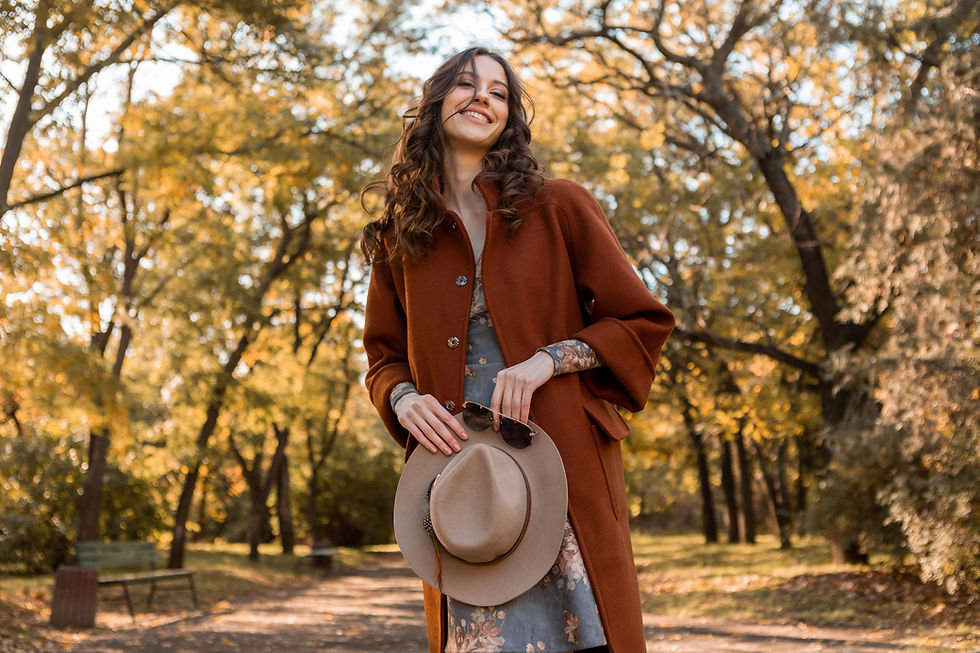
Outdoor portraits come with one participant we can't direct: the weather.
Heat, humidity, wind and rain can all affect a session.
And sometimes it's not technically raining, but the conditions still aren't great for portraits. Wind can wreak havoc on hair. Extreme heat can make everyone miserable pretty quickly.
If we're shooting outside, flexibility is useful.
Sometimes the studio really is the better choice
Location portraits can be fantastic, but don't choose a location just because it seems more interesting.
Sometimes what you need is a clean background, controlled lighting and a space where we can concentrate entirely on you.
That's what the studio does really well.
It also eliminates quite a few variables. No weather. No crowds. No hunting for parking. No wondering whether a delivery truck is going to park directly behind our perfect shot.
You don't have to find the location by yourself
If you already know exactly where you want to shoot, great. Tell us.
If you only know what you want the photos to feel like, that's useful, too.
Send us inspiration photos. Tell us what the portraits are for. Show us the outfits you're considering. Tell us whether you're imagining something urban, natural, professional, casual or completely different.
We can work backward from there. Choosing a portrait location isn't really about finding the prettiest background.
It's about finding a place that helps us tell the right story.


Comments